
“When I do good, I feel good. When I do bad, I feel bad. That’s my religion.”
― Abraham Lincoln .
For my religion ISU blog post, I will discuss Christianity and Islam, and how the two religions are similar and different. I will briefly describe the two religions, and then dig deeper to discuss what they religions share in common and what is unique to them.
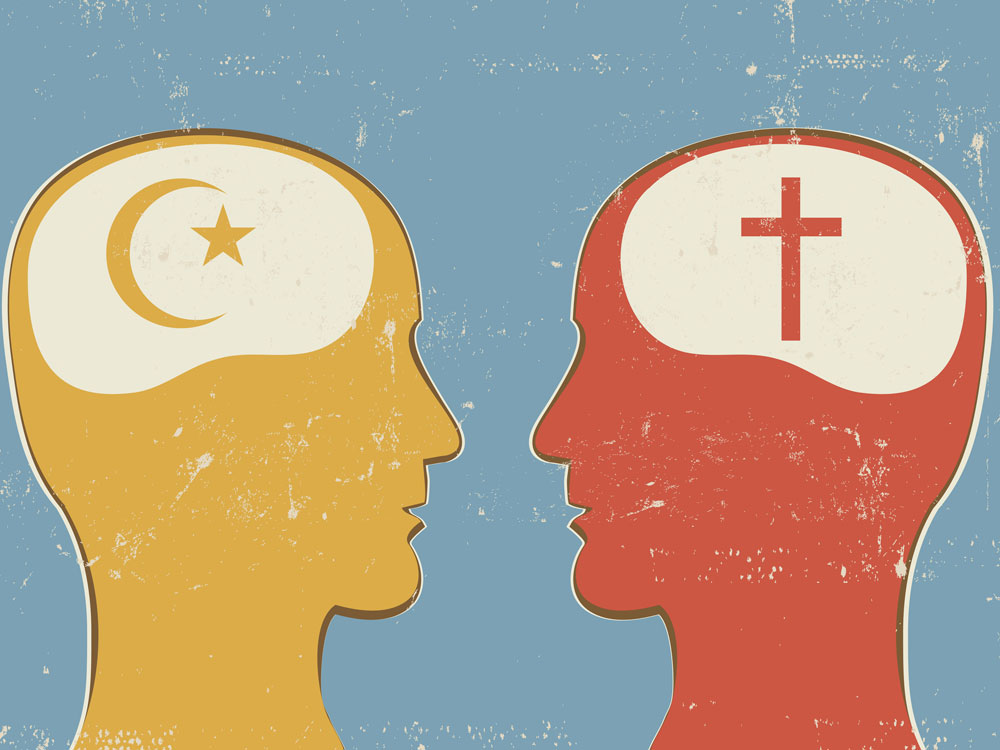
Basic Overview of the Two Religion’s
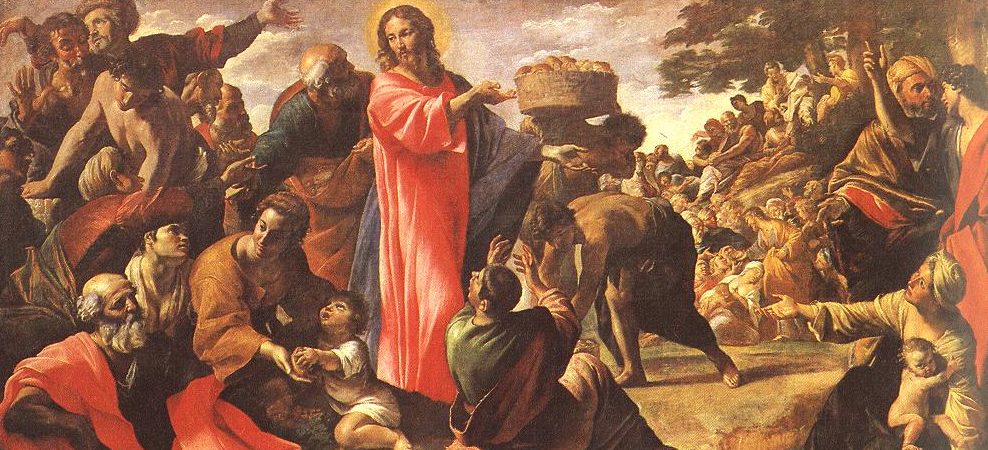
Before we begin to dig deep into the specifics of Christianity and Islam, let’s first take a look at the basic overview of the two of them, to get a general understanding of the history and what they stand for. Christianity starts with Jesus of Nazareth, a Jewish rabbi who lived in the 1st century Palestine, born in Bethlehem of Judea, the son of Joseph and the Virgin Mary. Jesus was handed over to the Romans by the leaders of the Jewish community who disagreed with his teachings and were jealous of his popularity with the common people. The Romans crucified Jesus, but when his tomb was found to be empty on the third day after his death, his disciples came to believe that he had risen from the dead.
Now, lets take a look at Islam. Islam starts with Allah sending a series of prophets and messengers to guide mankind toward the truth, beginning with Adam and ending with “The Seal of the Prophets”, who was Muhammad. Muhammad was the last prophet to convey the divine wisdom of God to humanity. For Muslims, Muhammad was the last prophet who completed the teachings of all the prophets who came before him. Muslims refer to him as “The Prophet Muhammad” and always add the words “peace be upon him.
Name Signification
Before we begin discussing the similarities and differences, what do the names of the two religions signify?
Christians take their name from the title which they give to Jesus – “The Christ”. Christ is a Greek word (Χριστιανός) which means Messiah. Christians believe that Jesus was the Messiah.
Both Islam and Muslim are derided from an Arabic word which means “submission” Islam in literal terms means that ones submits and exposes themselves to God.
Beginning of the Religion
Both religions are monotheistic religions, meaning both believe in one God and one God only. Christianity believes in God, and Islam believes in Allah. One difference is that Christianity believes that God sent down His Son Jesus to reclaim to word of the Lord, while in Islam they believe that God had no son or relations.
The time line for the two religions are very close in proximity, with Islam forming approximately 600 years after Christianity. Christianity began in the 1st century AD after Jesus died as a Christian. Christianity started about 2000 years ago in Judea (present-day Israel) with Jesus Christ and His faithful group of disciples. According to the Bible, the first church organized itself 50 days after Jesus’s death on the Day of Pentecost—when the Holy Spirit was said to descend onto Jesus’s followers.
Islam began in the year 622 CE, the year when Muhammad moved from Makkah to Madinah (present-day Saudi Arabia). This move is called the Hijrah, which means “departure”. Muslims believe the Hijrah was very important, as it was the beginning of the success of Islam. They way the two religions started were very similar. God sent down a line prophets to deliver His message before Jesus and Muhammad. Both Jesus and Muhammad were the final two to convey Gods message.
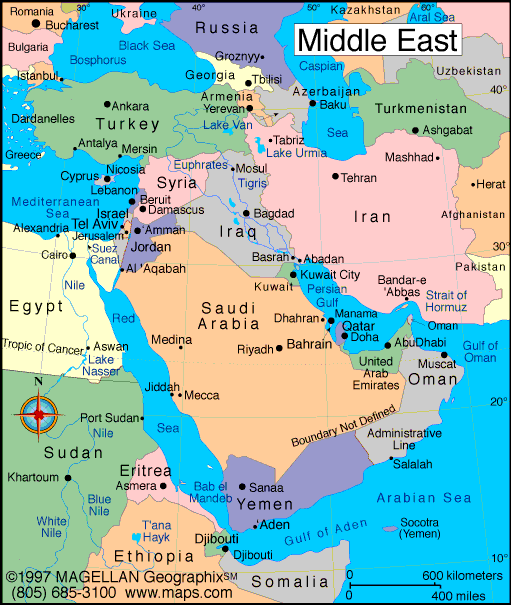
Both countries where the religion started are in very close proximity with them being Judea for Christianity and present day Saudi Arabia for Islam.
Core Beliefs/Rules to abide by
What core beliefs do the two religions follow?
Down below are the external duties that Christians and Muslims must follow, which is the domain of the law for both religions containing rules and regulations that affect one’s entire life. Even though these are the rules that the two religions must abide by, that does not mean that it is just limited to that. Internal duties such as faith, gratitude to God, sincerity and free from egotism affect the person as a whole.
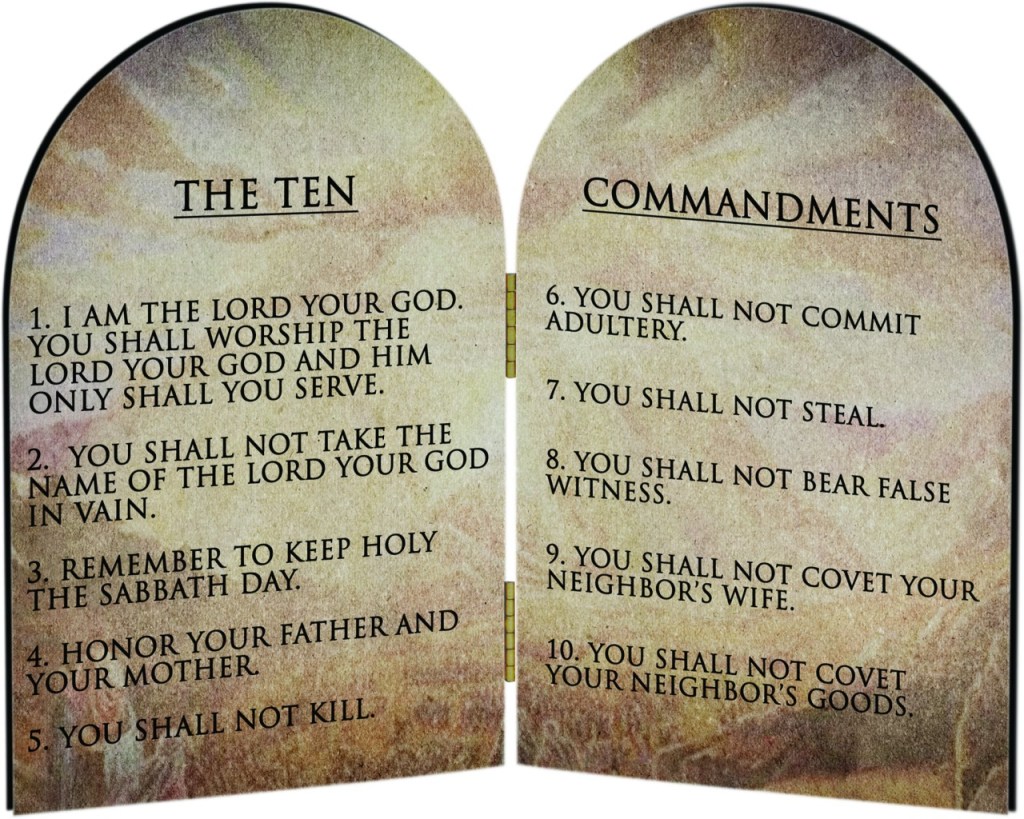
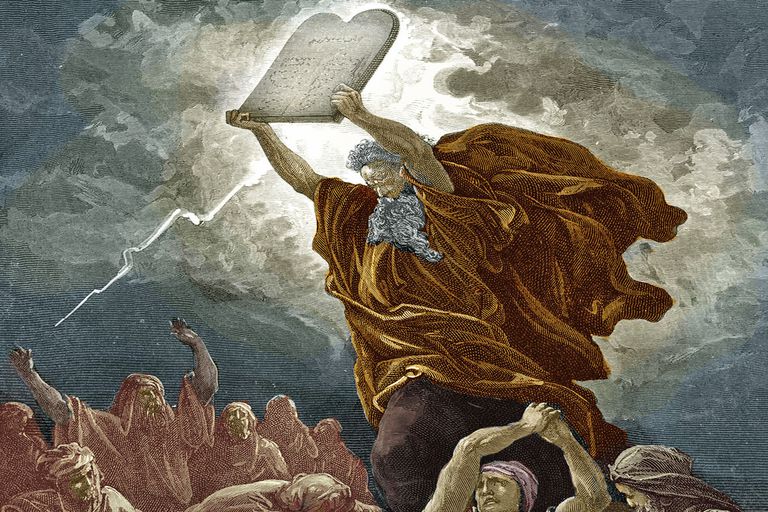
Christianity’s basic beliefs follow the 10 Commandments that God told Moses on Mount Sinai during the covenant. In the Ten Commandments, Moses outlined a basis for morality which has lasted over 3,000 years. The most common form of the Ten Commandments is given in Exodus chapter 20 and Deuteronomy chapter 5.
- Thou shalt have no other gods before me
- Thou shalt not make unto thee any graven image
- Thou shalt not take the name of the Lord thy God in vain
- Remember the sabbath day and keep it holy
- Honour thy father and thy mother
- Thou shalt not kill
- Thou shalt not commit adultery
- Thou shalt not steal
- Thou shalt not bear false witness against thy neighbour
- Thou shalt not covet anything that is thy neighbour’s
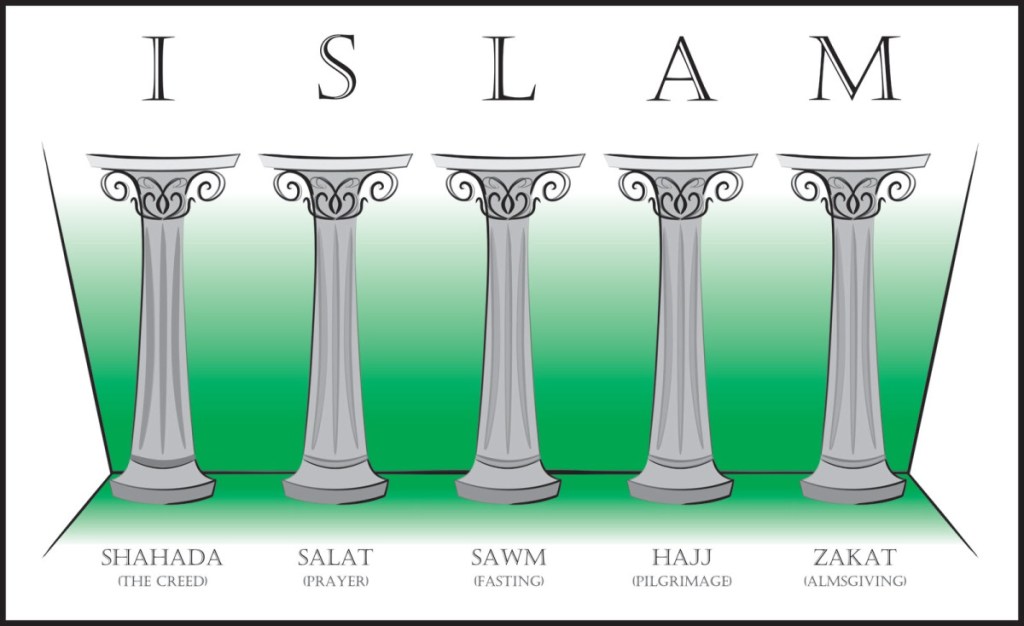
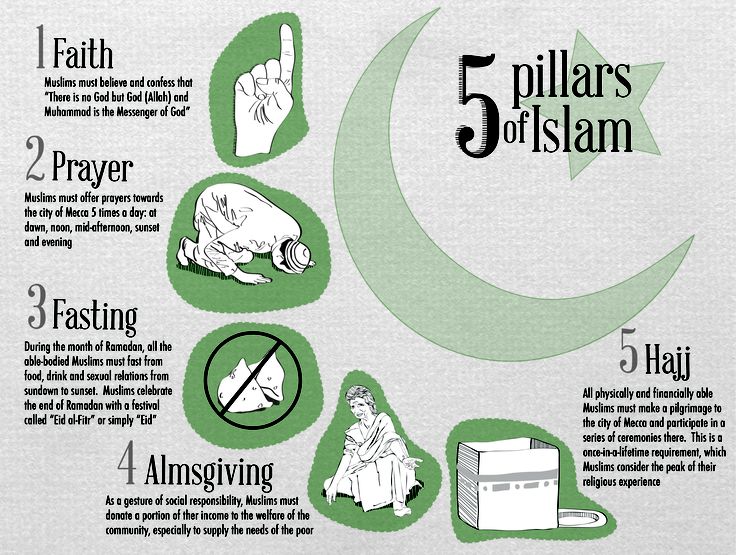
In Islam, Muslims follow The Five Pillars of Islam. The Five Pillars of Islam are the five obligations that every Muslim must satisfy in order to live a good and responsible life according to Islam.
- Shahadah: sincerely reciting the Muslim profession of faith
- Salat: performing ritual prayers in the proper way five times each day
- Zakat: paying an alms (or charity) tax to benefit the poor and the needy
- Sawm: fasting during the month of Ramadan
- Hajj: pilgrimage to Mecca
By taking a look at both The Ten Commandments and The Five Pillars of Islam, there are noticeably some differences and similarities between the two. First off, The Ten Commandments is a list of rules for Christians to live by, given by God to Moses. In Islam, the Qur’an does not list the Ten Commandments explicitly, but their substance appears in various places. Instead, like previously stated, The Five Pillars of Islam is a list obligations that every Muslim must satisfy in order to live a good and responsible life.
Within that difference is a similarity between the two, both religions are obliged to follow their commitments to the full extent in order to fully be committed to God. Another similarity is that for both religions, their number one rule is to not have any other Gods before their own. This makes sense, as both religions are monotheistic, and have a long history of prophets being sent down by God, steering people away from idolatry and teaching them the ways of the Lord.
Another difference is that The Ten Commandments is a not only a list for Christians to follow, but it is general in the sense that all people of all religions and backgrounds can follow in certain aspects of their lives. In Islam, The Five Pillars of Faith are specifically in place for Muslims, as the obligations can only be performed by Muslims. Not everyone can fulfill the Hajj or fast for Ramadan, but everyone can follow certain rules from The Ten Commandments (honour thy father and thy mother, thou shalt not kill or steal etc,). One thing which is special to Islam is that families are obliged to give to the less fortunate, signifying that everyone is responsible to take care of one another.
History of the Prophets
Now, let’s look at major prophets that shaped the two religions, and how they compare/contrast eachother in Christianity and Islam.
| Prophet | Christian Perspective | Islamic Perspective | How they are Similar /Different |
| Noah | Reffered to as: Nuh ibn Lumik ibn Mutushalkh | Both have the same perspective of Noah. Noah warned people of the error of their sinful ways, built an ark, survived the flood, rebuilt civilization and shared new laws governing God’s creation | |
| Abraham | Abraham is seen as the patriarch of Christian faith. He taught people to worship the one God and abandon idolatry. Christians believed that the Hebrew line descends through Abraham’s son Issac, who was the son of Sarah. Abraham had two wives; Hagar and Sarah | Referred to as, Ibrahim, Abraham is one of the seven prophets who received the Scriptures from God. He is mentioned frequently in the Qur’an. He taught people to abandon idolatry. Abraham approved to be the source of two great prophetic families: Arab lineage through his son Ismael and Ismael’s mother, Hagar. In the end, Abraham gave people a sense of their moral and religious obligations. | For both Christianity and Islam, Abraham taught people to worship God and abandon idolatry. His descendants were also very influential. The difference is that in Christianity, Abraham was the patriarch of Christian faith, while in Islam, Abraham received the Scriptures from God. |
| Moses | Agree with the Islamic position. Also, Moses was sent by God to free the Hebrew people from slavery, leading them out of bondage to the Promise Land. He was also sent to give the Jews God’s law through the Ten Commandments. Moses was also a king | Referred to as Mūsā ibn ʿImrān, or Musa, Moses was sent to proclaim the one God to the idolaters of Egypt. Moses, who is mentioned over 200 times in the Qur’an is very highly regarded in Islam. Moses used miracles to demonstrate God’s power over the Egyptians. He received God’s law in the form of the Ten Commandments. | Same role in both religions. |
| Jesus | Jesus is the Son of God and part of the Holy Trinity. Jesus was born of the Virgin Mary, suffered persecution, was crucified and died, and rose again after three days. He ascended into heaven and will return to judge the living and the dead. | Named ʿĪsā ibn Maryam, or Isa Jesus was born miraculously by the Virgin Mary and, over the course of his life,performed many miracles.However, the Qur’an specifically denies that Jesus was the divinely appointed son of God. The Qur’an also does not support the belief that Jesus died on the cross.Instead it holds the position that Jesus never died and ascended into heaven and will return to aid humanity again in the future. | In both religions, Jesus was born of the Virgin Mary and performed many miracles over his lifetime. The difference is that in Islam, the Qur’an denies that Jesus was the the son of God, while in Christianity, Christians believe that Jesus was God’s son. |
| Muhammad | Holds no formal view of Muhammad. | Muhammad is “The Seal of the Prophets,” the last of those who have come to convey the divine wisdom of God to humanity. As with every prophet he is afforded the highest spiritual prominence because he directly received the divine word of God. He instantly conveyed these Quranic revelations to all people. For Muslims, Muhammad is the last prophet, who completed the teachings of all the prophets who came before him. All the preceding prophets are regarded as“ Muslims” in the sense that they all taught: a) belief in one God, and b)the importance of living a virtuous and moral life. These two fundamentals constitute “Islam” in the broadest sense of the word, i.e., submission to the Will of God. | In Islam, Muhammad is the last of the prophets to convey Gods message, while in Christianity, Muhammad is never mentioned |
The prophets above are very similar in their roles that they played. Some of the prophets overlap, while some remain special in their own religion, for example Muhammad.
Important Figures
Lets look at the history of the two most important figures in both religions: Jesus and Muhammad. As previously stated, both were sent down to deliver God’s final message to the world. If you look at the history of the two, both of their life stories were very similar in the sense that they were outsiders among the common people.
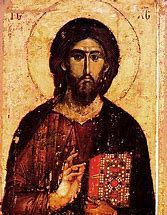
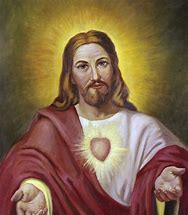
Jesus is a religious leader whose life and teachings are recorded in the Bible’s New Testament. He is a central figure in Christianity and is emulated as the incarnation of God by many Christians all over the world. Jesus Christ was born circa 6 B.C. in Bethlehem. Little is known about his early life, but his life and his ministry are recorded in the New Testament, more a theological document than a biography. According to Christians, Jesus is considered the incarnation of God and his teachings are followed as an example for living a more spiritual life. Christians believe he died for the sins of all people and rose from the dead.
Muhammad is the prophet and founder of Islam. Muhammad was the prophet and founder of Islam. Muhammad had a very hard childhood, with his father dying when he was only six years old, to being brought up by his grandfather then his uncle. Most of his early life was spent as a merchant. As a young man, Muhammad was already known for his honesty and goodness. Being married to Khadijah, with all of the wealth and happiness, Muhammad had everything he could possibly want for. In the trade capital of Makkah, Muhammad noticed wicked activity throughout the city, which included idol worshiping and sacrifices. At age 40, he began to have revelations from Allah that became the basis for the Qu’ran and the foundation of Islam. By 630 he had unified most of Arabia under a single religion.
Even though Jesus and Muhammad lived very different lives, one thing was clear; they were unpopular and had a hard time spreading God’s message across to the people. Many people were expecting Jesus Christ to be there “king” in a powerful and political sense, not to be told how to change their spiritual outlook on life and to follow God. In Jesus’ own day, when people found out that his intent was actually to show them how to defeat sin in their own lives (rather than simply tell them what to do as a political leader), they often grew angry. Even though many people disagreed with what Jesus was saying, he still believed in God message and did not give up spreading it.

For Muhammad, few people believed his preaching in Makkah, but he became unpopular since most of the people did not like being told they were wicked sinners and that their ways were wrong. As Muhammad encouraged people to follow Allah and abandon idolatry, many people were against this idea. Muhammad did not give up because he knew that what he was doing was right, and continued to spread God’s message to Madinah, where the success of Islam really started.
Both Jesus and Muhammad were considered outsiders and only had a couple of followers at first, but the main thing is that they were persistent in God’s message and never gave up.
Places of Worship and Levels withing the Religion
Now let’s look at the places of worship and the levels of the church. For Christians, they pray at a church where services are led by a priest. The levels of the church consists of the Laity (the people), Deacons (aid the priest for mass), Priests (service one parish), Bishops (presides over one dioceses, many parishes), Archbishops (serve over several dioceses), Cardinals (193 worldwide), the Pope (Bishop of Rome). In the Catholic Church, a parish priest (also known as a pastor) is a priest appointed by the bishop to represent him to the local parish.
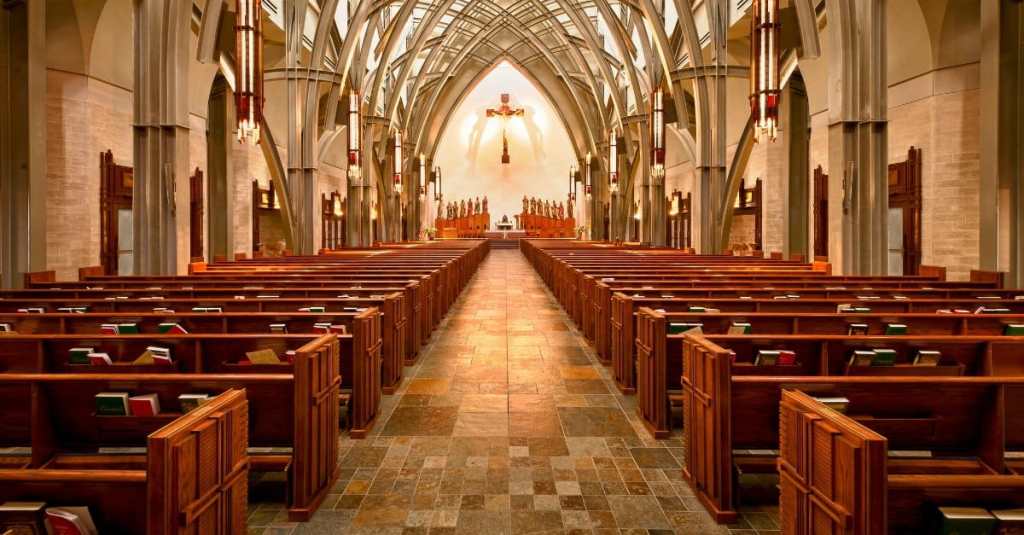
A typical Catholic church 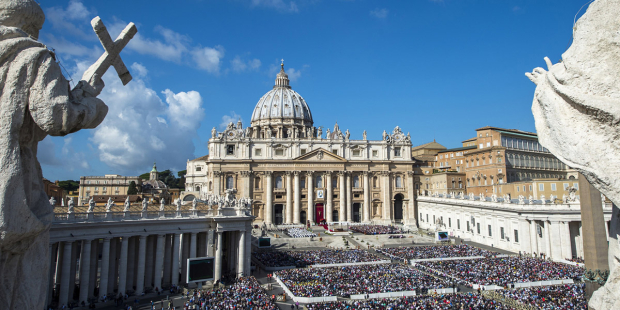
The Papal Basilica of St. Peter in the Vatican
For Muslims, group prayer service is held at a Mosque. Prayer can also be done in any clean space at home, at work, at school etc. In Islam, religious leaders roles are numerous, and there is not much of a hierarchy. Most mosques have a resident imam, who conducts communal prayer. He speaks from an elevated platform called a minbar. Often imans have jobs outside of the mosque and simply act as one of the members of the community who leads a prayer. The term has different connotations for Shi’a and Sunni Muslims.
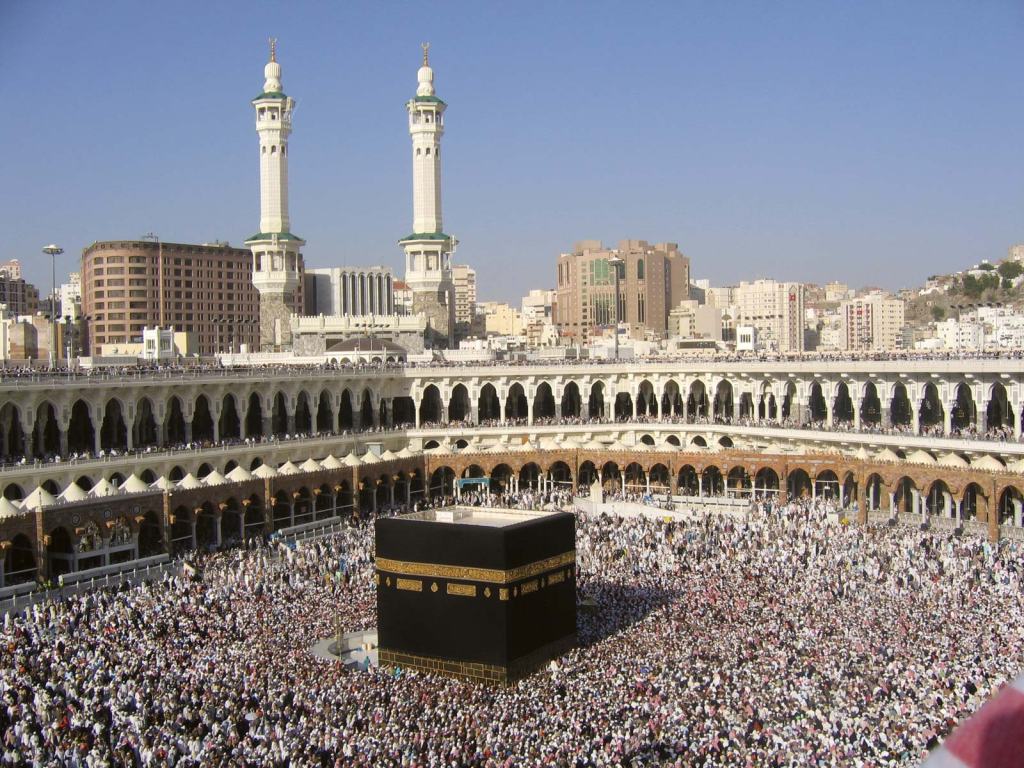
The Kaaba is a building at the center of Islam’s most important mosque, 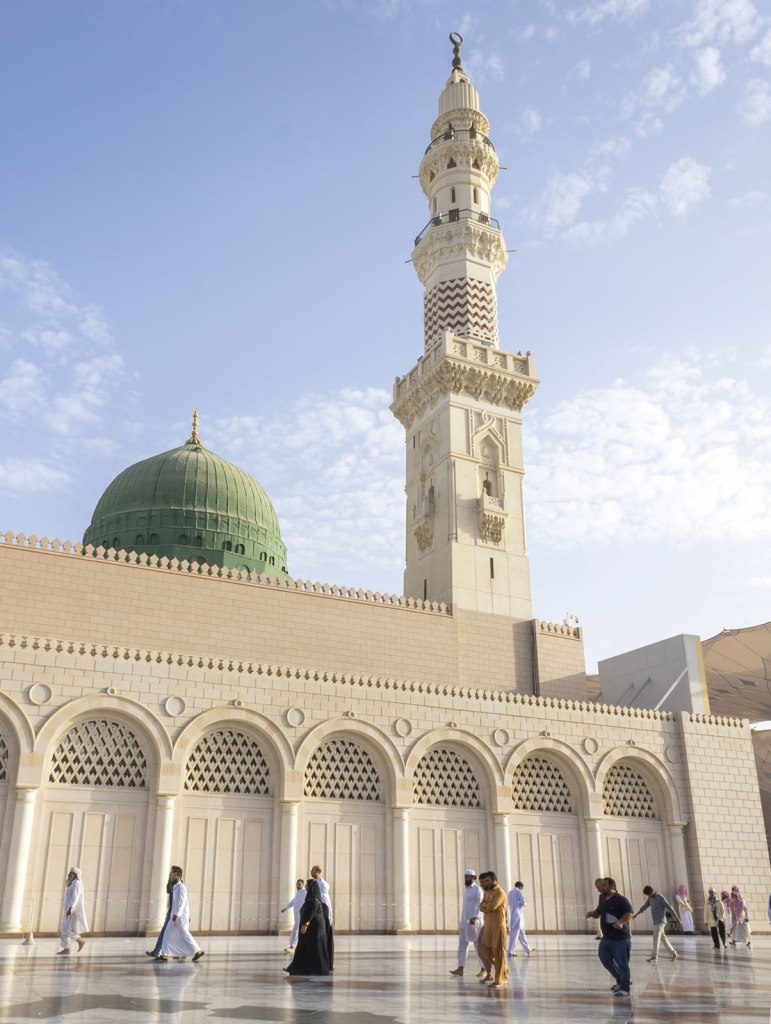
A mosque in Saudi Arabia
The main difference is that in Christianity there are levels of the church, while in Islam there is no order of hierarchy. For both religions there is always a man leading the service. The difference is that in Islam, the imam has other roles outside of the church, while the priests job is as a priest.
Symbols
In Christian churches, there are a lot of symbols and images (the portrayal of Jesus, the prophets etc.), while Islam permits no symbols because its represents idolatry. This is the reason why there are no images of Muhammad or Allah. The reason why Islam permits no pictures is that praying to an image of Muhammad would technically be idolatry, because the only focus of the prayer should be towards Allah. Instead of images, mosques are designed using intricate geometric patterns.
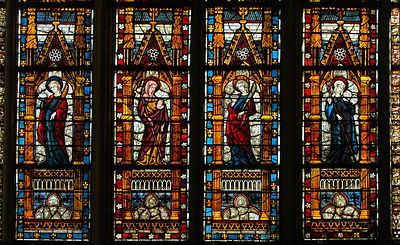
Often incredible works of stained glass artwork can be seen in older churches 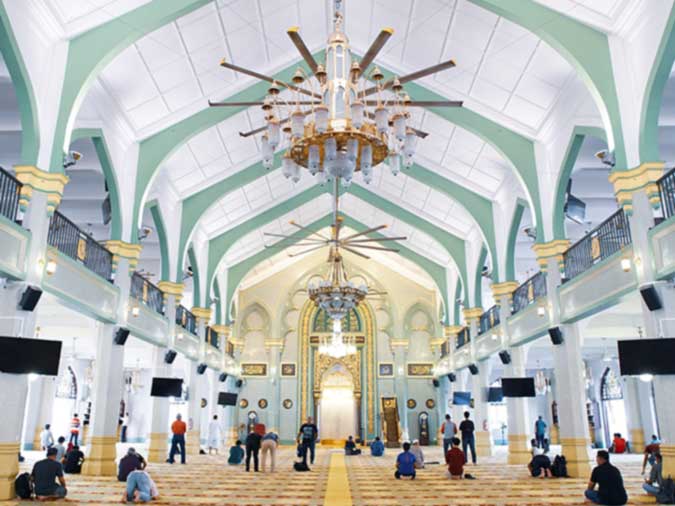
Mosques are designed using very complex geometric patterns
Holy Books
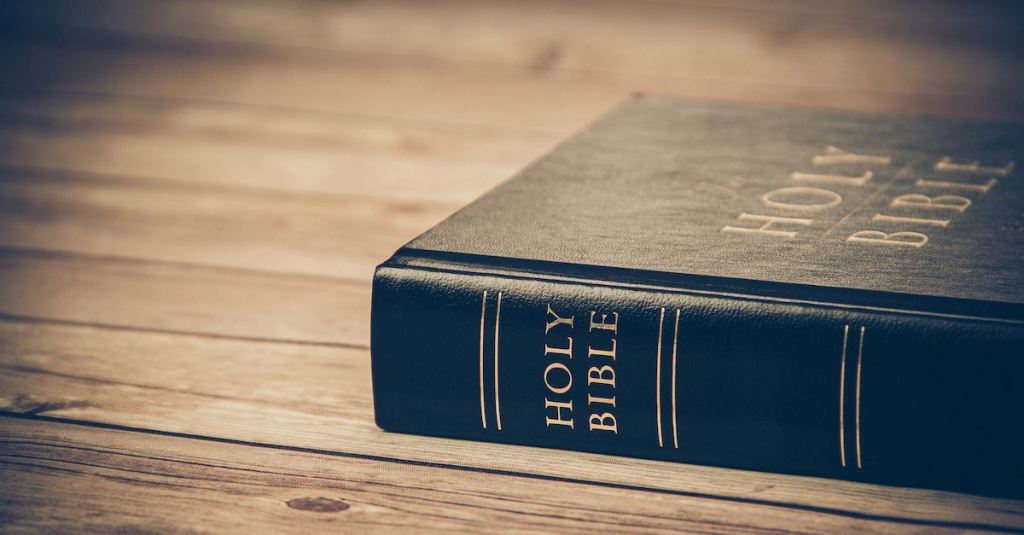
In Christianity, the bible is a book with Christian scriptures, consisting of the Old and New Testaments. The bible is the primary way God speaks to us. The writing of the Bible took place over sixteen centuries and is the work of over forty authors. It has many stories about the lives of good and bad people, about battles and journeys, about the life of Jesus, and about early church activity. It includes narratives and dialogues, proverbs and parables, songs and allegories, in history and prophecy. The events in the Bible were not generally written down as they occurred. Rather they were told over and over again and handed down through the years, before eventually being written down.
The Qar’an is the Muslim’s holybook. Muslims believe that the words of the Qur’an are the words of Allah. The word Qur’an means recitation, and Muslims believe that Muhammad recited what Angel Jibril taught him. For this reason, Muslims believe that the words of the Qur’an should not be changed in any way, because they are words of Allah. For worship, the Qur’an is read in Arabic, and the holy books are treated with great respect when and when not in use. Muslims who learn the Qur’an by heart, as they believe what it teaches is so important and that it will help them on The Day of Judgment.
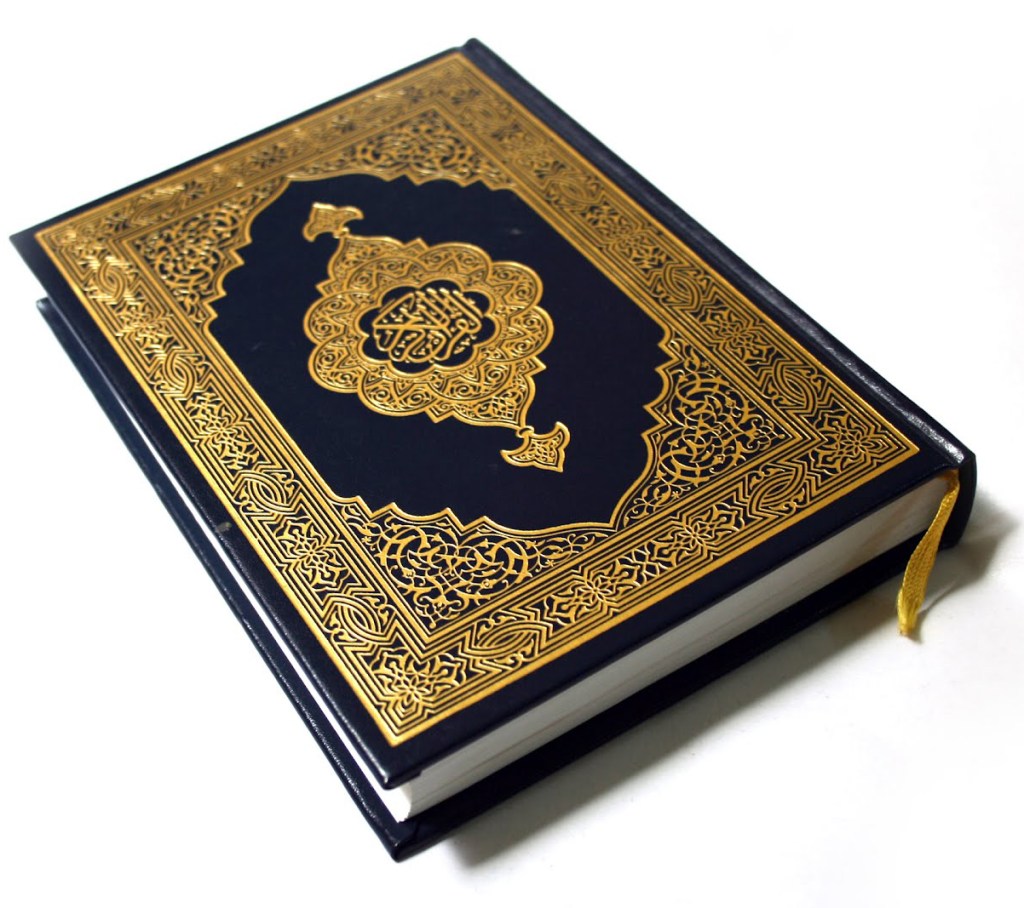
Both religions have their own holy book. The Bible and the Qur’an describe the teachings of God, the life of the prophets, parables etc. Misconceptions say that the Qur’an and the Bible are very different, when in reality they share many of the same teachings and beliefs
Prayer Rituals/Characteristics of the Church
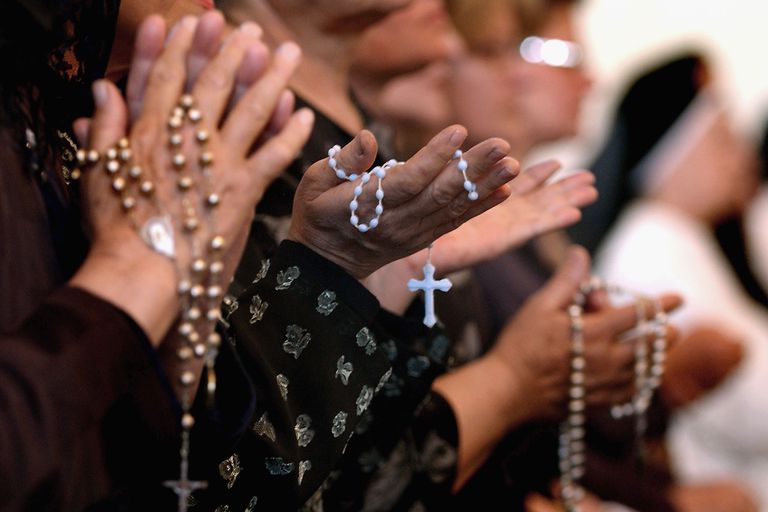
For both religions, there are many prayer rituals. The most holiest days of the week is Sunday for Christians, which the principal day of communal worship and the weekly memorial of the resurrection of Jesus Christ, and Friday for Muslims as it is a day of rest and communal praying in the mosque, especially for men.
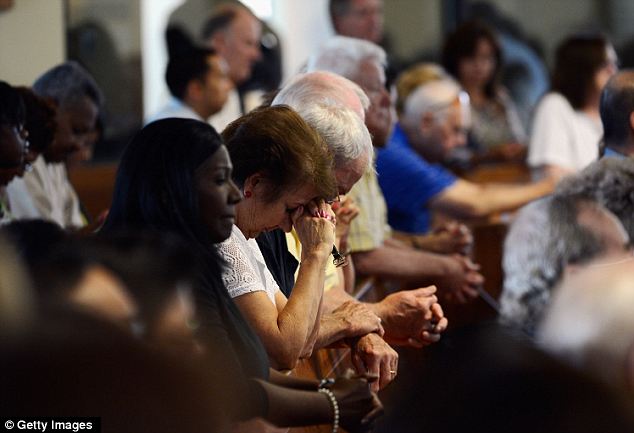
Typically, Christians go to church once a week, on Sunday, the day of rest. The central ceremony in Christian church life is the Eucharist or Holy Communion. The people line up to receive a sip of wine and a wafer of bread. Catholics believe that during the service these turn into the blood and body of Jesus (‘transubstantiation’). They sing hymns and hear readings from the Bible. The main service is called Mass in the Catholic church and the Divine Liturgy in the Orthodox church.
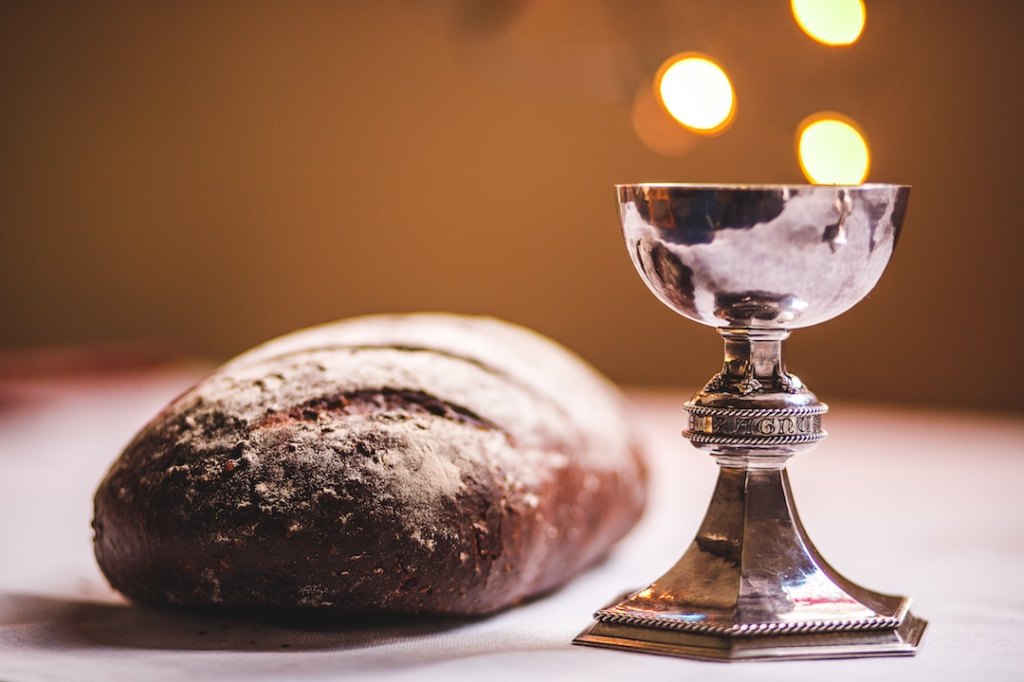
Holy Communion 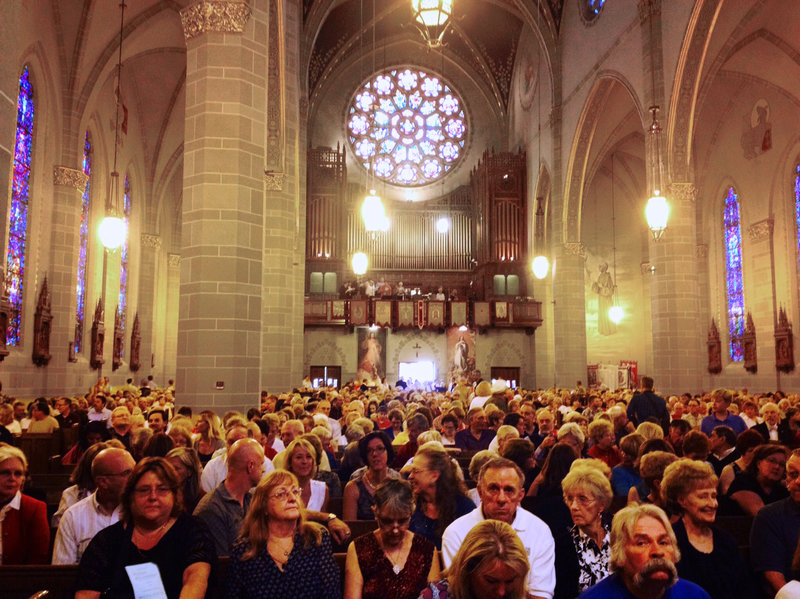
People attending a mass
While worship is often thought of only as services in which Christians come together in a group, individual Christians can worship God on their own, and in any place. Different churches, even within the same denomination, will use very different styles of worship. Some will be elaborate, with a choir singing difficult music, others will hand the music over to the congregation, who sing simpler hymns or worship songs. Some churches leave much of the action to the minister, while others encourage great congregational participation.
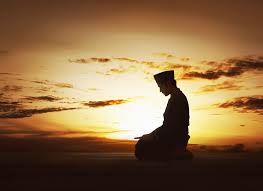
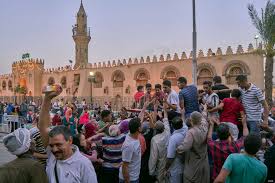
Muslims pray five times a day: at sunrise; just after midday; during the afternoon; shortly after sunset; and when it is dark. Usually praying is done at home, work or wherever the person happens to be. A prayer mat may be used, and a special cap or head cover worn. When a Muslim prays, they stand then bow at the waist. Kneeling and standing then touching the ground (forehead, hands, knees and toes touch the ground). Muslims always face the holy city of Makkah while praying.
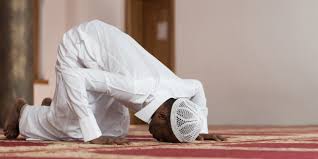
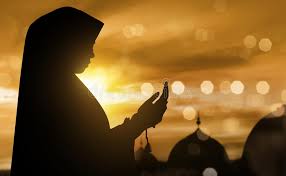
In Islam, salat is the obligatory Muslim prayers, performed five times each day by Muslims. It is the second Pillar of Islam.
God ordered Muslims to pray at five set times of day:
- Salat al-fajr: dawn, before sunrise
- Salat al-zuhr: midday, after the sun passes its highest
- Salat al-‘asr: the late part of the afternoon
- Salat al-maghrib: just after sunset
- Salat al-‘isha: between sunset and midnight
All Muslims try to do this. Muslim children as young as seven are encouraged to pray. The prayer ritual, which is over 1400 years old, is repeated five times a day by hundreds of millions of people all round the world. Muslims must be clean before they pray. They make sure of this by performing ritual washing, called wudhu. Mosques have washing facilities. Muslims, regardless of where they are on Earth, pray towards the Kaaba (the big black cube in Mecca). Muslims can pray anywhere, but it is especially good to pray with others in a mosque. Praying together in a congregation helps Muslims to realize that all humanity is one, and all are equal in the sight of Allah
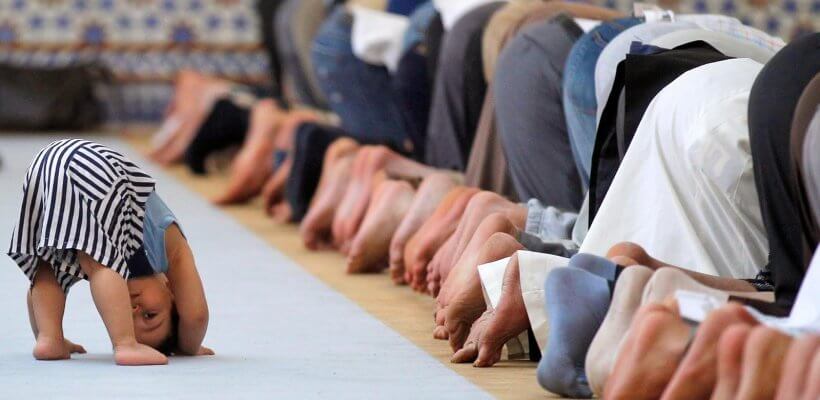
When it comes to praying, the two religions have a different set of rituals that take place. In Islam, it is obligatory to pray five times a day, while in Christianity, Christians congregate at the church once a week for prayer (Christians can pray more than once a week, it is just not obligatory). Christians are not required to wash themselves before prayer, while in Islam, wudhu is important as it is supposed to cleanse the body before prayer.
One thing in common is that prayer at the mass/mosque is important, as it represents everyone coming together to worship God. Prayer can be done at home for both religions, but going to the service once a week is important as it brings the community together under one roof. This lets people meet other Christians/Muslims in their community, as well as have a deeper connection of God.
Denominations
For both religions, there are multiple denominations with different beliefs. The core beliefs are the same.
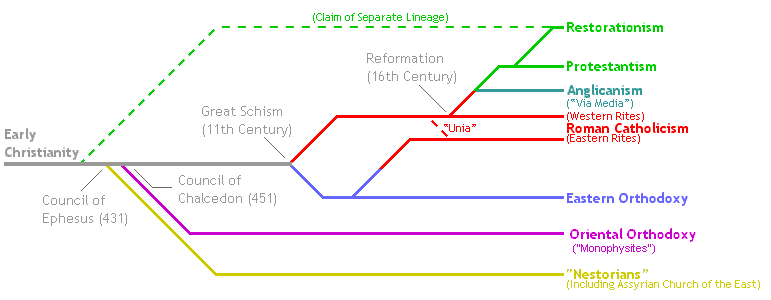
Christianity is divided into many different groups called denominations. All denominations in Christianity believe that Jesus is the Son of God. The first Christian organization was the Catholic Church, which eventually broke into different denominations, especially in the 1500’s. Christianity is divided between Eastern and Western theology. In these two divisions there are six branches: Catholicism, Protestantism, Eastern Orthodoxy, Anglicanism, Oriental Orthodoxy, and Assyrians. Protestant denominations are separate from each other and have split several times.
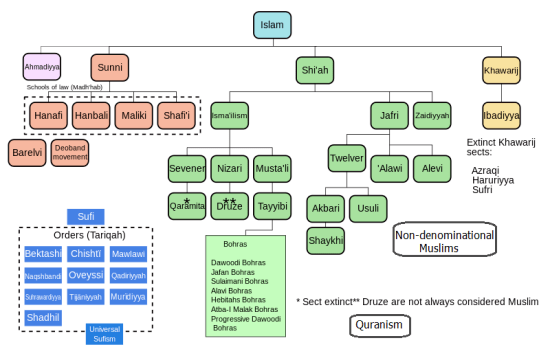
In Islam, there are a number of Islamic religious denominations, each of which has significant theological and legal differences from each other. The major branches are Sunni, Shi’a and Sufi.The majority of the world’s Muslims are Sunnis, with Shi’a being the minority group of the two, with the exception of Iraq and Iran where they are the majority. The ‘split’ between the Sunnis and the Shi’a occurred in 632 and originated after a disagreement over the rightful successor of the Prophet Muhammad after his death.
Milestones
Let’s look at the milestones that the two religions have (sacrament is only defined as in Christianity) and other rituals that both religions have that take place throughout a person’s life.
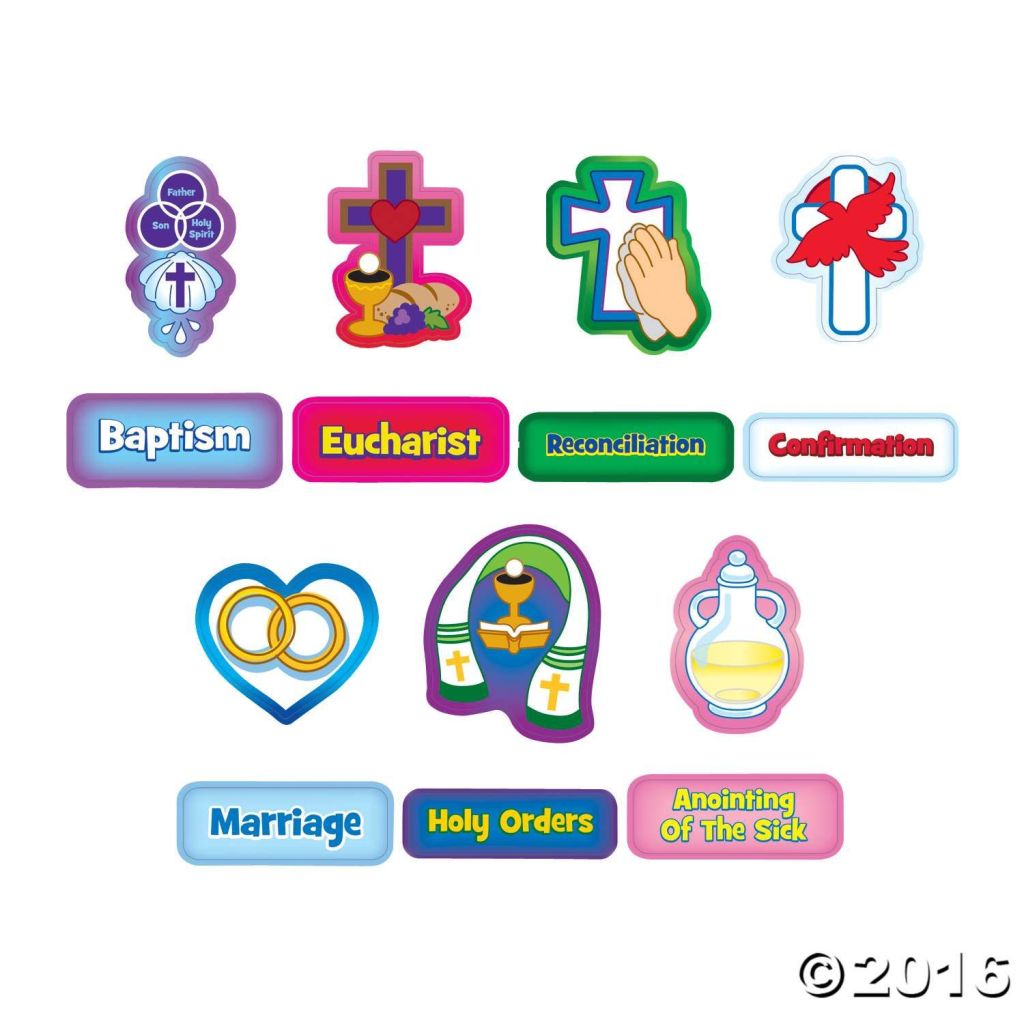
In the Catholic church, there are 7 sacraments. The seven sacraments are baptism, confirmation, Eucharist, penance, anointing of the sick, marriage and holy orders. They are divided into three categories: sacraments of initiation, sacraments of healing and sacraments of service. In the Bible, Christ gives his followers clear instructions on how to administer and receive each of the sacraments. This is seen through his work with the Apostles, healing the sick, parables, giving his body and blood to nourish our souls and forgiving sinners. The Church administers these holy sacraments as instructed, in order for all to worship God and receive His salvation.
In Islam, there are a set of milestones that take places during a persons life .Muslims believe that a child is free from sin and that the child has a natural inclination towards goodness and virtue. The ceremony that is performed after a child is born is called Adhan which is also the call to prayer that is recited from minartes in Muslim countries. Aqiqah is the ceremony where sevens days after birth a name given ceremony is performed. The ceremony starts with the father reading from the Qur’an. Then the announcement of the name of the child follows the reading. Muslims can choose between a family name or one of Muhammad’s names.
The main difference is that in Christianity, there are sacraments while in islam there are milestones. There are a couple of differences and similarities and differences with these milestones.
In Christianity, babies are born with the Original sin. This is why a baptism takes place, in order to cleanse the Original sin from the child/person. In Islam, children are not born with any sins and are pure. In Islam, there is a naming ceremony where a child is given either a family name or one of “99 Beautiful Names” that describe God, while there is no naming ceremony in Christianity.
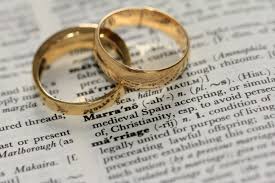
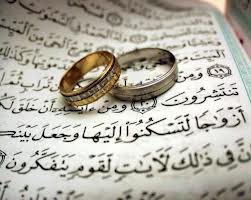
The sacrament of marriage is seen in both religions. Both marriages are legally sanctioned, and are done so as an act to please God. In Islam, a contract is signed, and there are two witnesses. Divorce is allowed, but is a last resort. In Islam, Polygamy marriages are aloud, while in Christianity they are not.
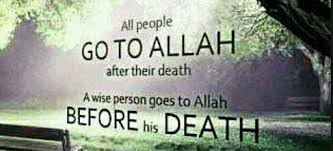
Both religions view death with a sense of hope that they will be reunited with God. In Christianity, if you lived a good life, you would be rewarded in being reunited with God in heaven. If you were bad on earth, you would be sent to hell. The same goes for Islam, with the equivalent of Jannah for heaven and Jahannam for hell.

Celebrations
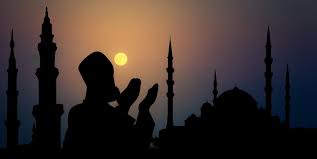
In Islam, Ramadan, is one of the major celebrations. Ramadan is the Muslim month of Fasting. Every year during the month called Ramadan, Muslims fast during the hours of daylight. The customs of fasting in Ramadan goes back to the time of Muhammad. Muslims fast from sunrise to sunset with the last ten days reserved for possible all night prayer vigils. Id-ul-Fitr is the festival which ends Ramadan, which marks the end of the difficult month of fasting. Before the festival begins, Muslims observe Zakat-ul-Fitr. This means giving money to the poor, with the idea that everyone should have enough money to celebrate the feast.
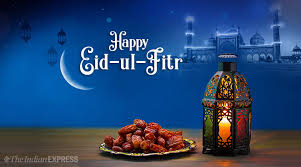
Muslims first eat prunes to break the fast
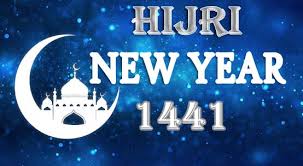
The Islamic New Year begins on the first day of the first month of the Islamic calendar, with the first month of the Islamic year is called Muharram. The Islamic New Year has been observed in this way since 622 AD when the prophet Muhammed fled from Mecca to Yathrib (now called Medina) to escape religious persecution. This migration is called the Hijra in Arabic, also spelled Hegira.The Islamic calendar is based on the lunar year, which has 12 months but only 354 days.
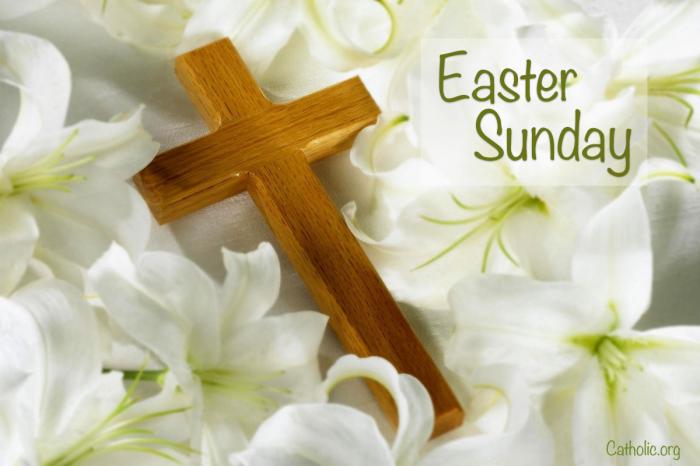
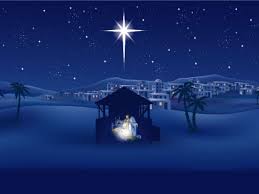
In Christianity, there are multiple holy celebrations. Advent is the four-week season of preparation for the birth of Christ, and for the Second Coming. Often an Advent wreath is used as a focus for prayer during Advent. Christmas is Jesus’ birth – often celebrated with nativity scenes, stories, pageants recalling the story of Jesus’ humble birth in a stable surrounded by animals. Lent is the period leading up to Easter commemorating the 40 days Jesus spent in the desert fasting and praying. A time for personal reflection and improvement through prayer, fasting, and study. Easter Jesus’ resurrection from the dead. Eggs are a major symbol of Easter since they symbolize new life. Crosses are often covered with flowers to symbolize Jesus’ victory over death.
Conclusion
In essence, Christianity and Islam share a lot in common and have certain aspects that are special to them. Regardless, one message is clear for both; be kind to all and show respect to your neighbor and God!
Thank you for taking the time to read my blog :)!
 Site Title